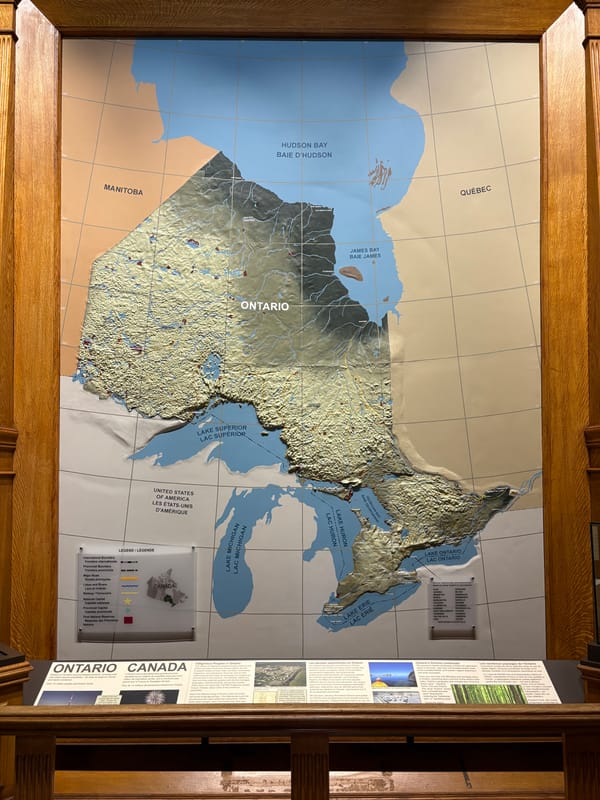
The old, original name of the place
Ever wonder about the name of Canada's biggest metropolis? Here is one piece of the story.
In 1834, the British colonial town of York incorporated as the City of Toronto. Why the name change? The British settlers who instituted private land rights, gridded streets, and Anglicanism to the shores of Lake Ontario had called their town York since the late 1700s.
But a reform movement led by the city's first mayor, William Lyon Mackenzie, was pressing for local rule and gaining traction. On a number of fronts, the reformists were up against the conservative class, represented first and foremost by the Family Compact, a clique of politically powerful clans seeking to reproduce a British style class system within the colony. The clash between these two factions played out on a number of fronts, including what to call the newly incorporated city.
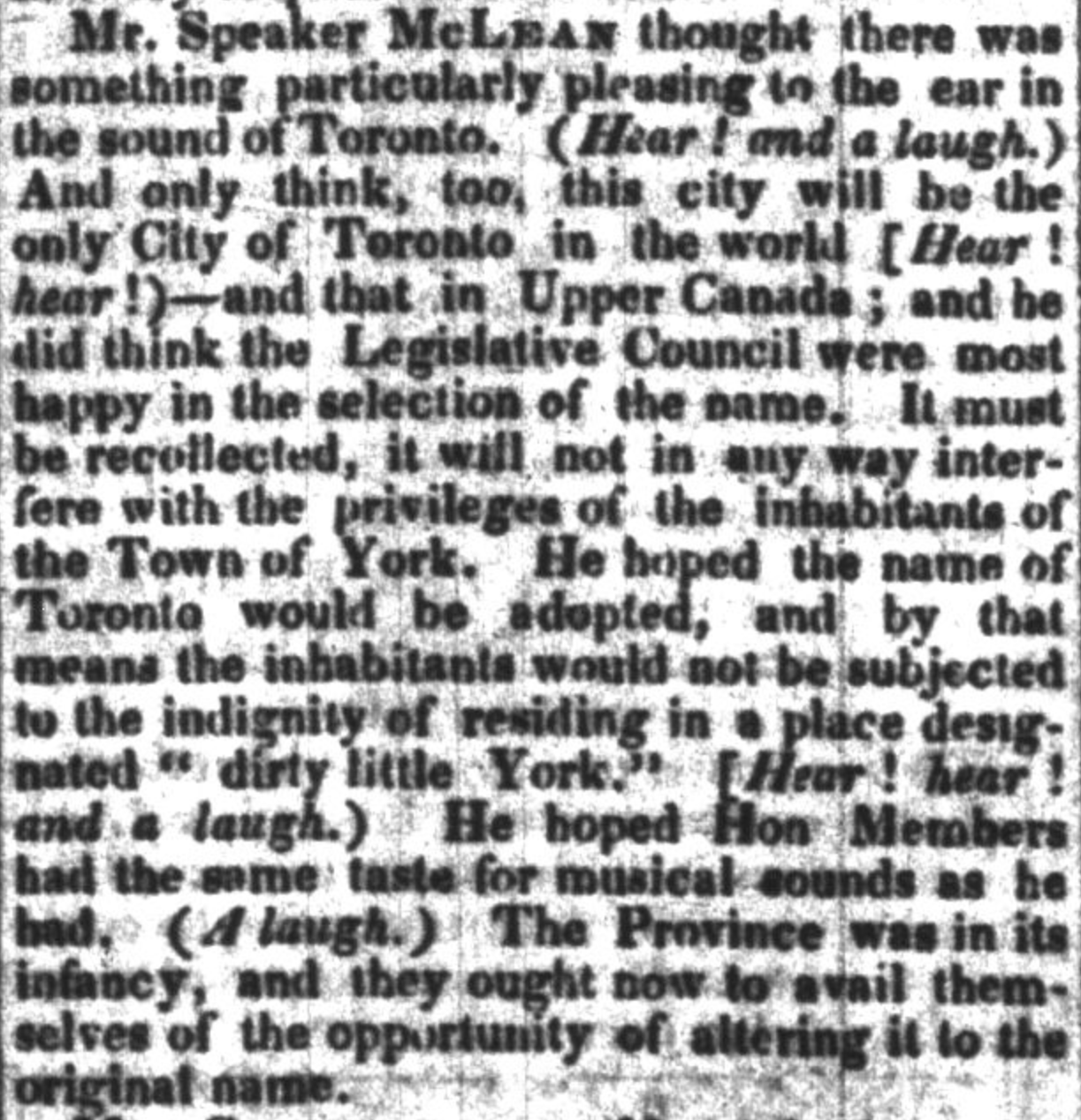
A lively report from March 1, 1834 sheds light on the debate in the Legislative Assembly, the lower house of Parliament for Upper Canada. The report not only summarizes each legislator's remarks but also includes colourful asides of the chatter from citizens in the gallery, who at turns laughed and cheered.
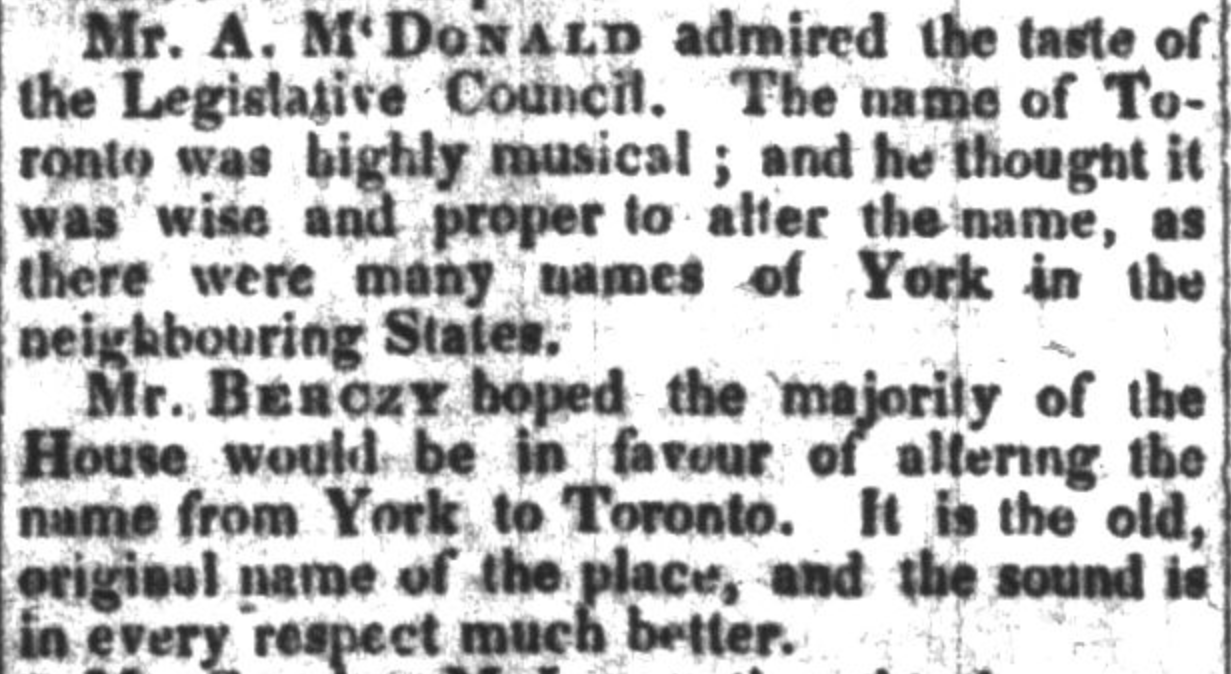
The Toronto camp argued that changing the name would distinguish the City from other Yorks (including New York) that Toronto had a musical, “wild and terrific" sound to it, and that it was appropriate as the “old, original name of the place.” If nothing else, the city could shed its moniker of “dirty little York,” a reference to the town's serious mud problem.
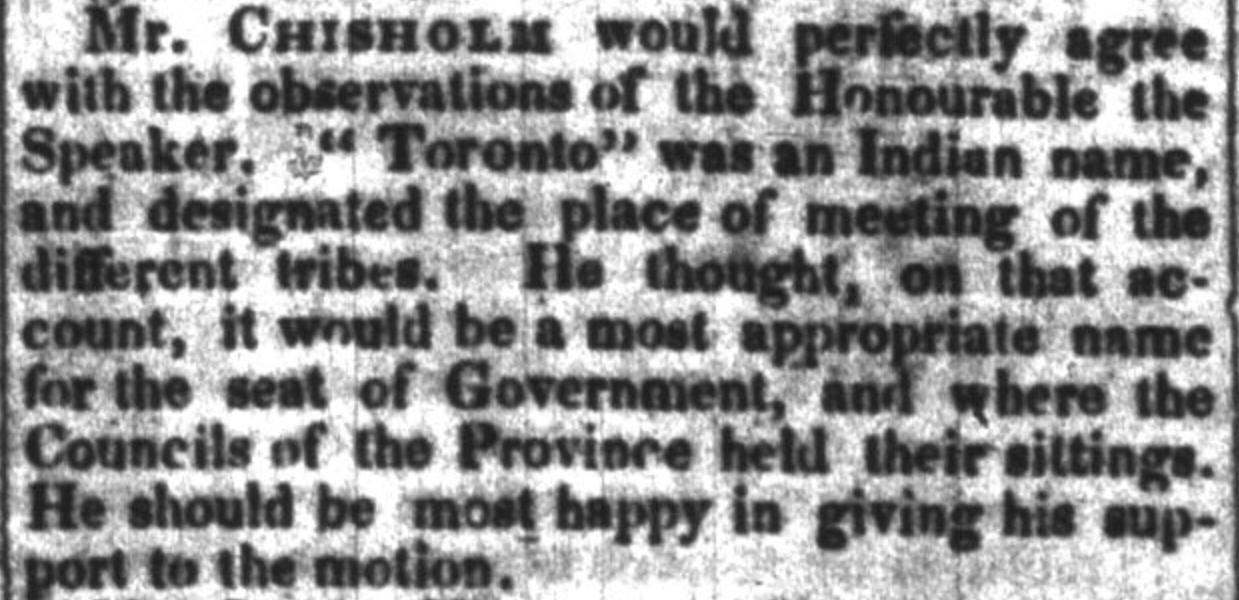
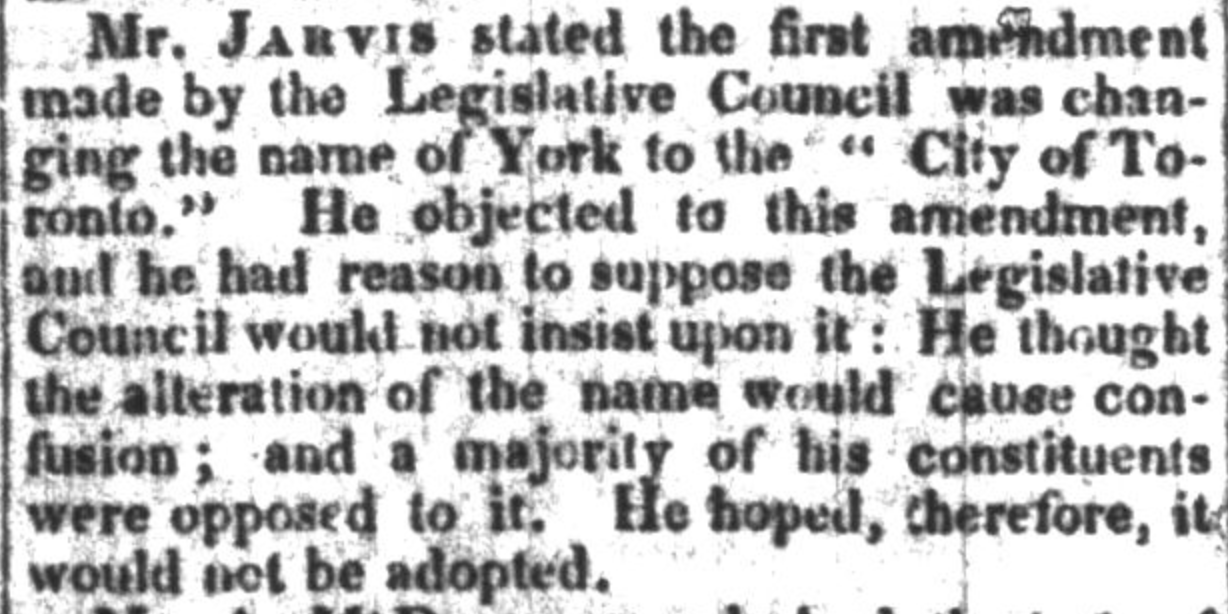
The York camp had a more traditionalist take. They liked that the name was short, and they liked its connection to the Royal family, having been named after the King's son, the Duke of York. They thought Toronto had a “jingling sound” and that adopting a new name would only cause confusion and inconvenience. The problem of being called “dirty” and “muddy” could be solved by getting rid of the mud.
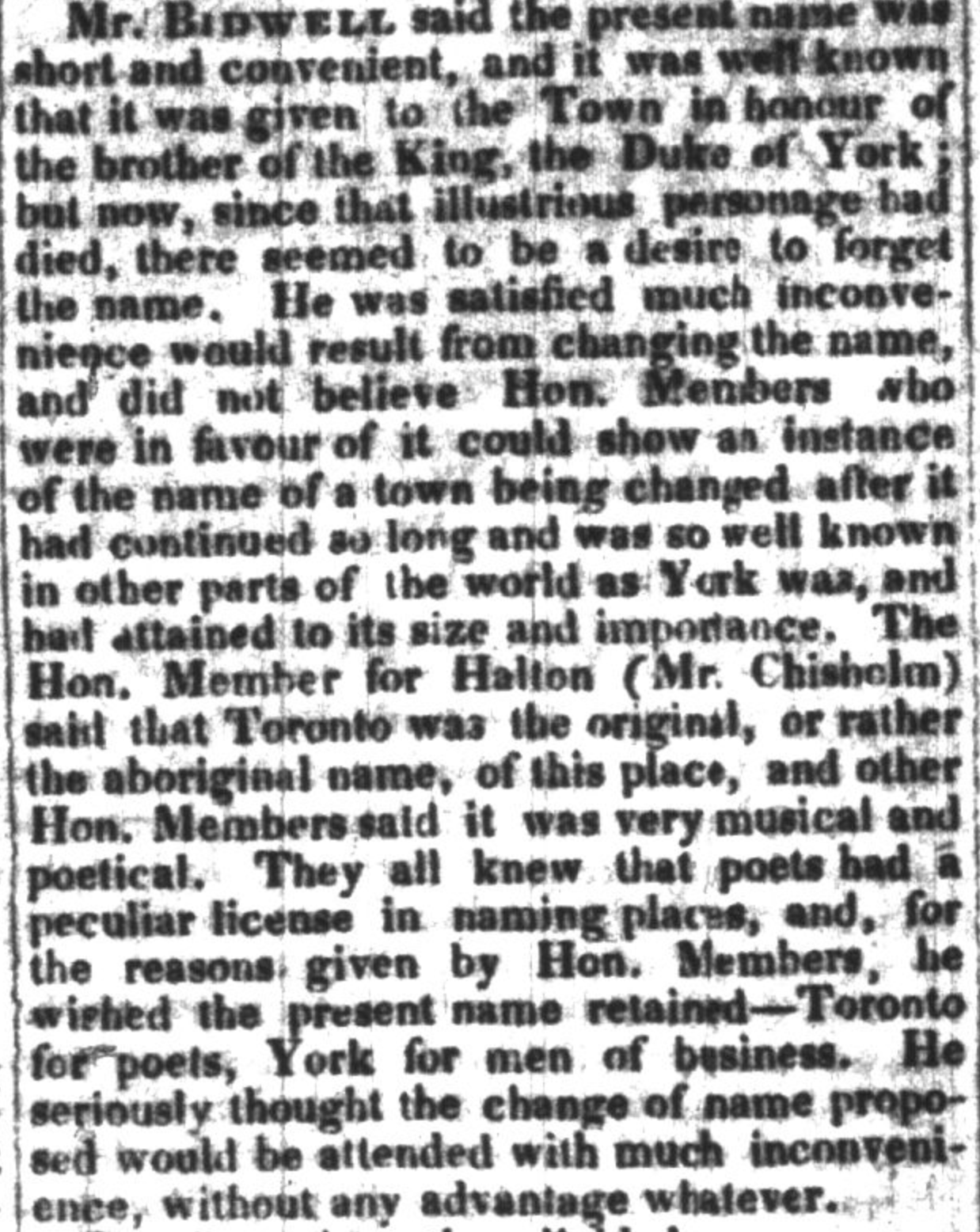
A Mr. Bidwell proposed (maybe sarcastically?) a middle path, offering that Toronto could be the city's name "for poets," with their "peculiar" tastes, while York could be retained "for men of business."
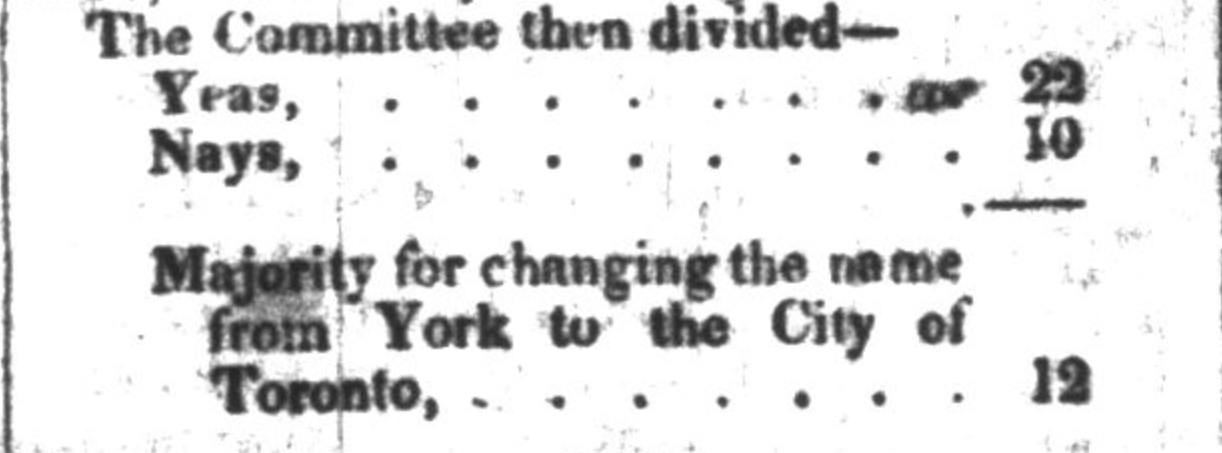
In the end, the vote was 22-10 for Toronto. Long live the poets.
This post is dedicated to the memory of my colleague and fellow local history buff Richard Fiennes-Clinton, who first pointed me to this report, and knew the answer to every Toronto question or at least where to look for it.