Carney's speech and the old world order
If you haven't watched PM Mark Carney's speech in Davos, it's worth the 15-20 minutes of your time (this clip is 30 mins but includes an intro and a Q&A).
It won't make you want to run through a brick wall, but it might compel you to jog a sensible 5K with a straight spine. Here's the transcript version.
To me the standout attribute of this speech is that, alongside lofty literary and historical references that are like a cool glass of water in the desert of contemporary political speechifying, it is very plain-spoken about What's Actually Happening. I imagine it was a relief for the Davos set (won't someone think of the Davos set??) to hear a world leader call a spade a spade, name the naked elephant emperor in the room, instead of making another tepid and ill-fated effort at stability-through-abject-flattery. Carney foregrounded the dignity and agency of People Who Aren't Donald Trump, an obviously mind-bending affront to the Solipsist In Chief (who indeed responded like Widdle Johnny Gotti as soon as he got a turn at the mic).
Something I found especially interesting is how Carney talked about the rules-based international order coming to "a rupture, not a transition." But the part I think most speaks to the modest project of this modest blog, and that was really refreshing to hear, is his forthright characterization of the post-WWII global order as being fundamentally afflicted by what Carney called "the gaps between rhetoric and reality." To me there is no better example than the hypocritical insistence on American Exceptionalism, the U.S.'s belief and behavior on the world stage that largely boils down to "rules for thee, but not for me."
Here's what Carney said:
"We knew the story of the international rules-based order was partially false that the strongest would exempt themselves when convenient, that trade rules were enforced asymmetrically. And we knew that international law applied with varying rigour depending on the identity of the accused or the victim."
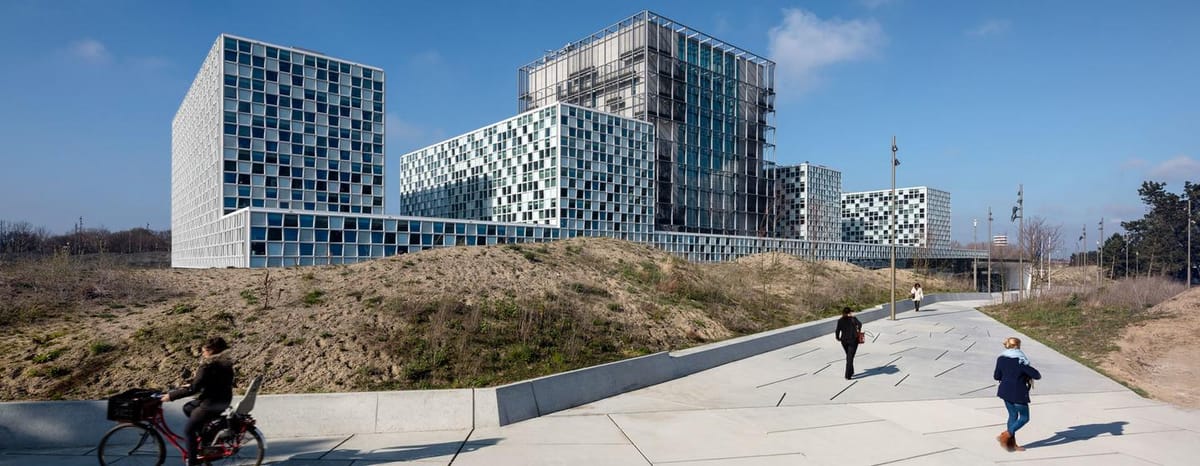
If I may, YES. One of the biggest wtf? learning moments for me in law school was the extent to which the U.S.'s posture towards international law is, "mmm no, that's just for the peasants." Like, the ICC is cute and all, but no way would we ever sign onto it, because then other countries would presume to opine on our actions abroad, which are always good and righteous, and those godless heathens would think they have some sort of ability to say no to us, which they don't and never will. Reminds me of someone! (The ICC does have some fundamental flaws, like the requirement that a country not be able to adjudicate an issue internally, which gives the Court's mandate an inescapable paternalistic quality by basically exempting everywhere with a court system.)
We presumptuously thought of and called ourselves the leaders of the Free World while war criminals like Bush and Cheney forged ahead on their international follies, secure in the knowledge that America being a Shining City on a Hill or whatever means that no one can tell us nothin. International covenants that aimed to bring stability and peace to the post-WWII world were purely optional for us, something the Supreme Court might for instance give a pat on the back to in a footnote but that could never truly determine or even meaningfully inform a judicial outcome.
To me the idea of exceptionalism is suspect in every instance. But when it's coupled with real misadventures abroad and impunity at home it becomes a galling form of hypocrisy. Suffice it to say that Canada has its problems on a normal day, but it has not generally considered itself too good for international cooperation. And here, Carney said something I've waited years to hear on the world stage: that the U.S.'s arrogance and hubris sucks and is some bullshit. After a full weekend of hearing the most ahistorical and dumbassed pronouncements about Greenland coming from the U.S. regime, Carney's assertion of intellect, realism, and resolve was right on.